How the Roman Holiday of Saturnalia Morphed into Christmas
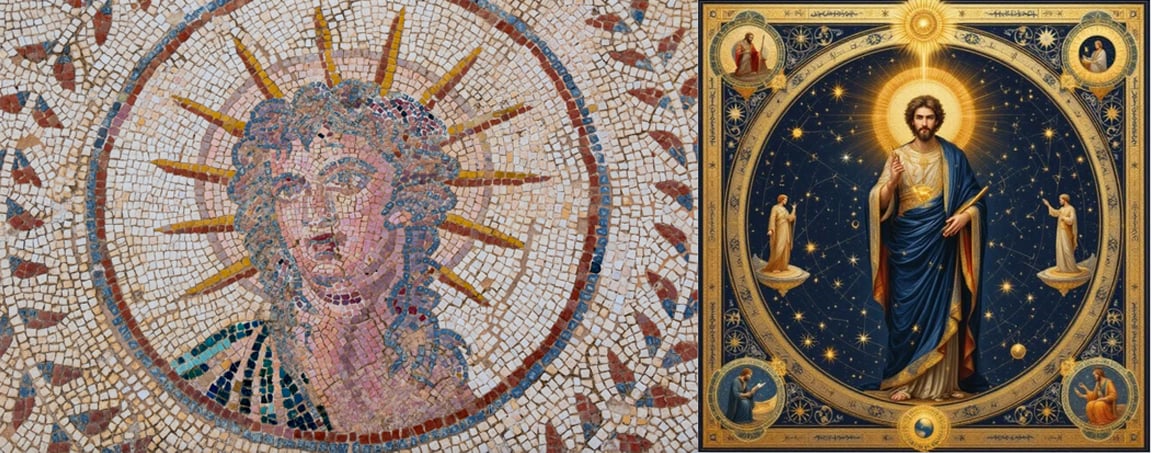
The ancient Romans loved a holiday. By some measures they celebrated upwards of 170 of them each year. That may seem like a lot, but the Romans didn’t have the concept of weekends, so the only time they got off from work were holidays. Two of their favorites were Saturnalia and the Feast of Sol Invictus, which ran consecutively.
Saturnalia was a week-long festival held in mid-December honoring the Roman god Saturn. Saturn was the god of time, generation, dissolution, abundance, wealth, agriculture, renewal, and liberation. His reign was seen as golden age of peace and abundance. The Feast of Sol Invictus was the celebration of the winter solstice, which the Romans personified as the rebirth of Sol Invictus, the “Unconquered Sun”.
While some Roman holidays were indifferently celebrated, Saturnalia was beloved by all. All forms of work were suspended. Schools were closed. Courts were not in session. Even exercise routines were put on hold. Everyone’s energies were directed too celebrating the holiday, which included feasts, gift giving, religious rituals, parades, and lots of merrymaking.
Most interesting, from our perspective, Saturnalia put a special emphasis on flipping existing social norms on their heads. During Saturnalia, slaves dined with their masters at table, drank with them, and played dice with them. They spoke to them as equals and received gratuities from them in the form of gifts. They even joked with them, if they dared.
We might think this odd, but, surprisingly, the subversion of social norms was a prominent part of Christmas until the mid-19th century. A tradition of employers inviting workers into their homes to be wined and dined and recognized with gifts was a central part of Christmas until the workers started getting a little too rowdy.
The solution was genius. Instead of barring workers from their homes at Christmastime, employers requested workers bring their wives and children to the party. Then the employers gave gifts, not to the employees themselves, but too their children. Thus, the tradition of giving gifts to children was born—but not until the late 19th century! Before that, Christmas had more in common with the feast of Saturnalia than our modern tradition of giving gifts on Christmas morning. Even our modern conception of Santa Claus was not invented until cartoonist Thomas Nast first drew him for Harper’s Weekly magazine in 1863.
While the social aspect of Christmas descended directly from Saturnalia, the religious aspect of Christmas owes much to the Feast of Sol Invictus. This was the Roman celebration of the birth of the unconquerable sun which occurred on December 25th. It is no coincidence that early Christian leaders chose this date to celebrate the birth of Christ. In fact, Christ was not born on December 25th. Evidence suggests He was born sometime in the summer. But early Christian leaders had a heavy lift in convincing newly converted Romans to celebrate the more staid Christian holidays rather than the rowdy pagan ones they so enjoyed.
Bear in mind, Christianity swept through the Roman world with astonishing speed and was taken up and enthusiastically adopted by a people who just twenty years earlier had been persecuting the very same people they were now trying to emulate. To say their dedication to the faith was shaky would be an understatement. In all likelihood most new Christians were simply going along in order earn political points or to be a part of a hot new social trend. It was one thing to pretend piety by genuflecting and mouthing Bible verses. It was quite another thing to forego Saturnalia. The Church knew this and made concessions.
If you’re thinking the Feast of the Risen Sun sounds an awful like the Celebration of the Risen Son, it was not by accident. The newly empowered Roman Church sought a seamless transition between the old ways and the new. For this reason much of the imagery and symbolism of Sol Invictus the pagan sun god were carried over to Christ. The image of Christ with a blazing halo around his head so common in early Byzantine art is evidence of that.
As for the celebration of Christmas as something to be enjoyed with plenty of food and drink and lots of merrymaking, that came directly from Saturnalia. Most Christian observances are sober and solemn, and the birth of the Savior would have been no different were it not for the early Church’s need to win over the spirited, merrymaking Romans. Thus, many of the traditions of Saturnalia have come down to us in the form of Christmas traditions. Even Christmas wreaths and Christmas lights were originally parts of Saturnalia, although the Romans used candles instead of electric lights, of course.
So, this holiday season while you’re celebrating the holidays with your family and friends, remember that many of your holiday traditions stretch back beyond the establishment of Christianity to our old friends the Romans, who loved a good holiday, and none more than Saturnalia and its more sober companion the Feast of Sol Invictus, the Feast of the Risen Sun (Son).