A Pictorial Tour of Ravenna
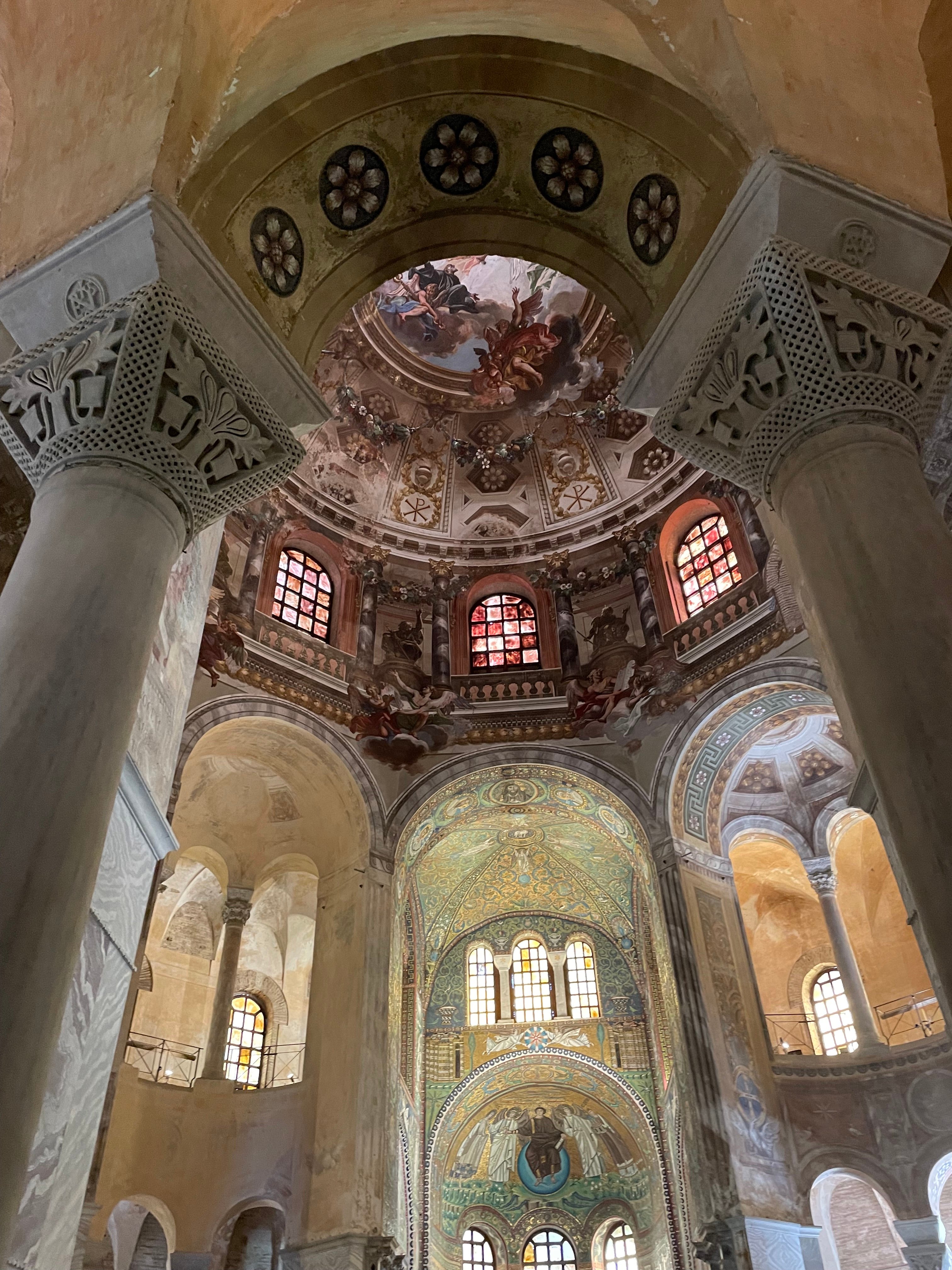
Ravenna is slightly off the beaten path for most tourists visiting Italy today but has a rich historical past and played a significant role in the waning years of the Roman Empire. Emperor Honorius moved the capital to Ravenna in 401 AD seeking a more defensible position. The marshes surrounding the city made it difficult to attack from the west, and its position on the Adriatic coast made it easy to reinforce by sea. Ravenna remained Rome's imperial capital until the Empire's collapse in 476 AD.
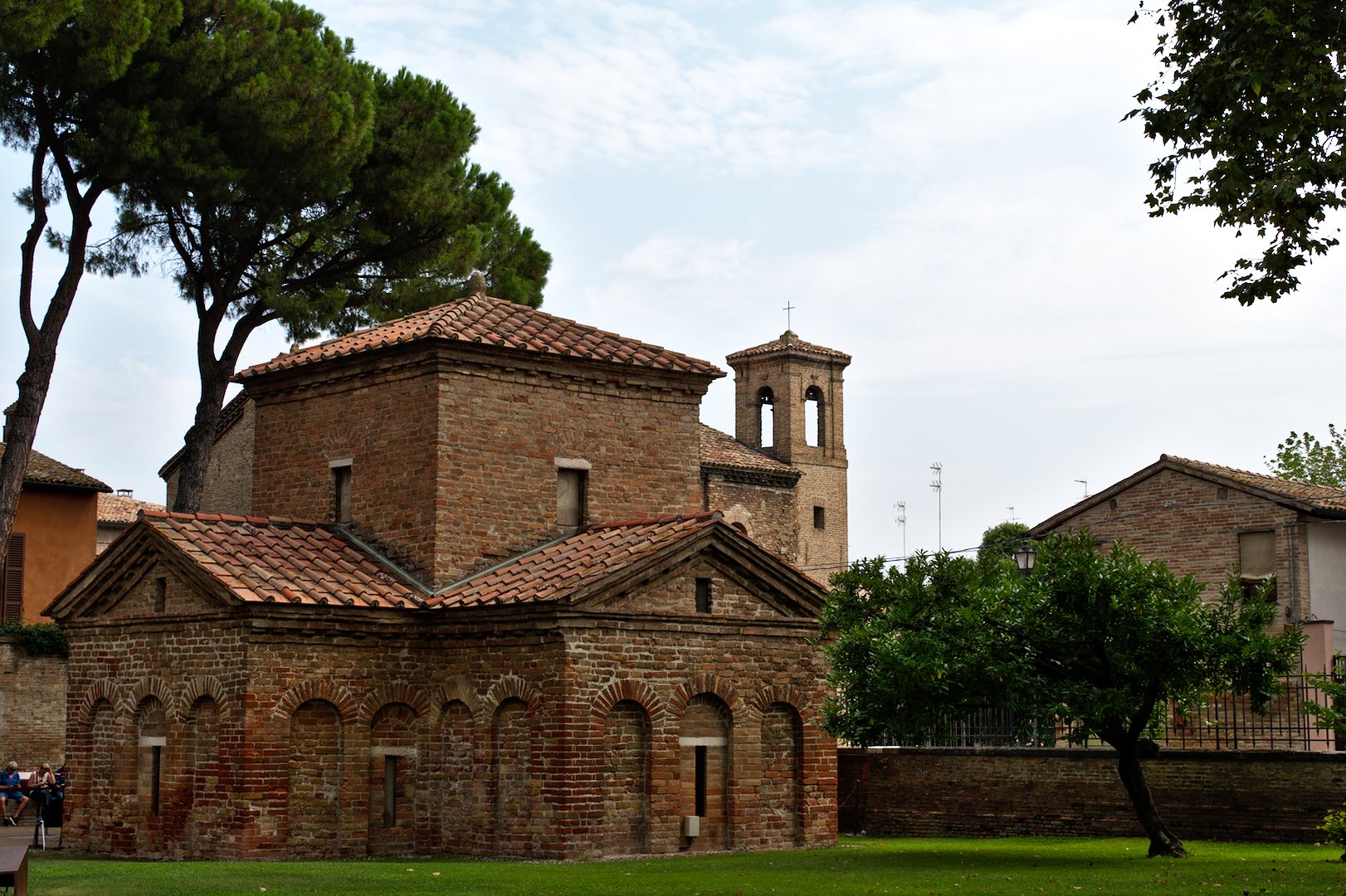
Renowned for its lavish mosaics, the so-called Mauseolum of Galla Placidia is principally responsible for the city's reputation as the City of Mosaics. The interior (see above) is breathtaking, but the building's claim to be the mausoleum of Galla Placidia is specious. The only woman to ever rule Rome, whose life I chronicle in my novel The Wind in the Embers, was probably buried in the city of Rome.
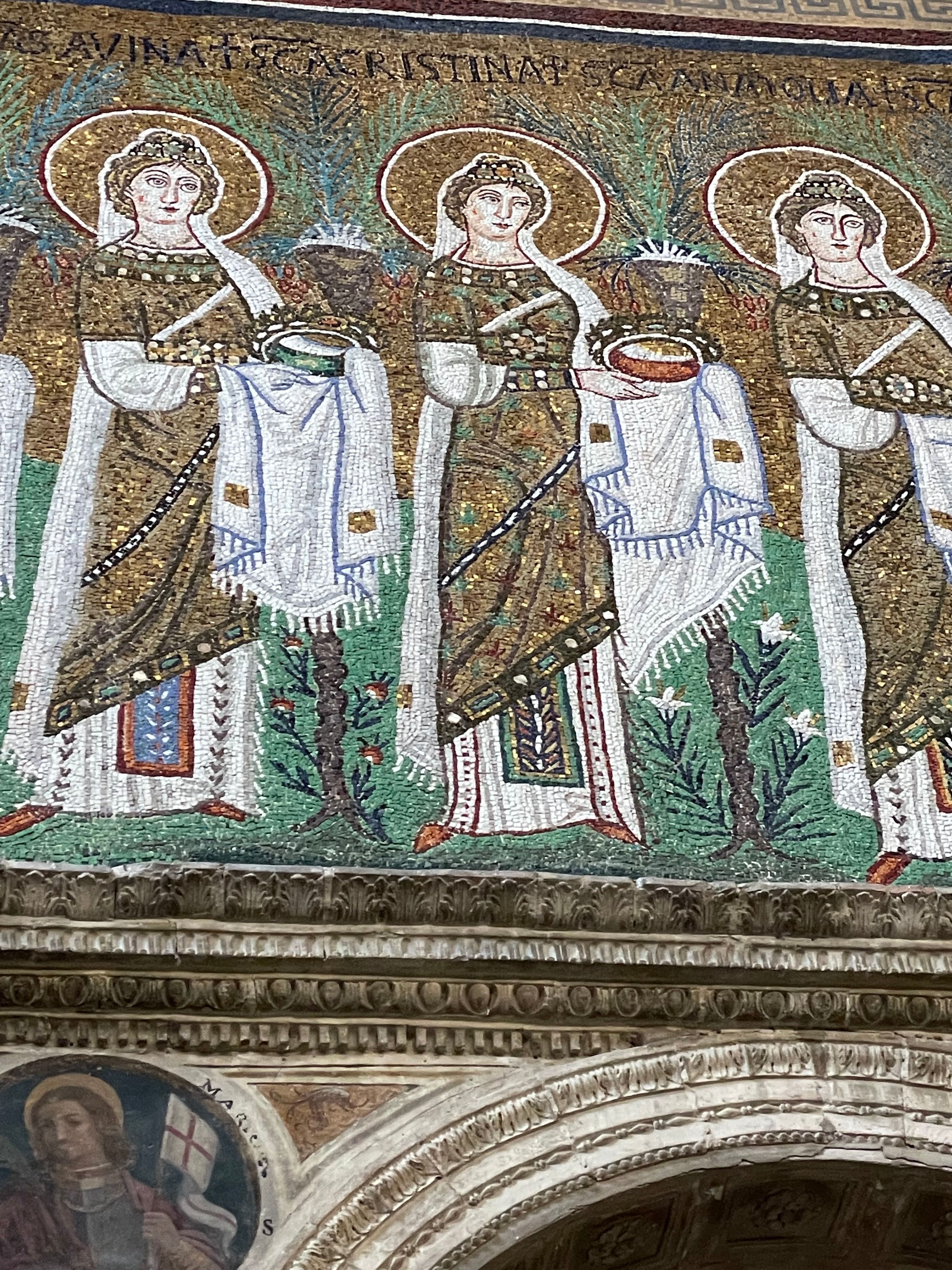
From 425 AD Galla Placidia ruled the Roman Empire from Ravenna as regent for her son until he became emperor in his own right upon marrying his cousin Licinia Eudocia in 437 AD. I tell Licinia Eudocia's story in two novels: The Shadows of Nemesis, and The Desecration of Fortune. Both women were devout Christians as reflected by the intricate artwork found in the Mausoleum, which was built between 425 AD and 450 AD.
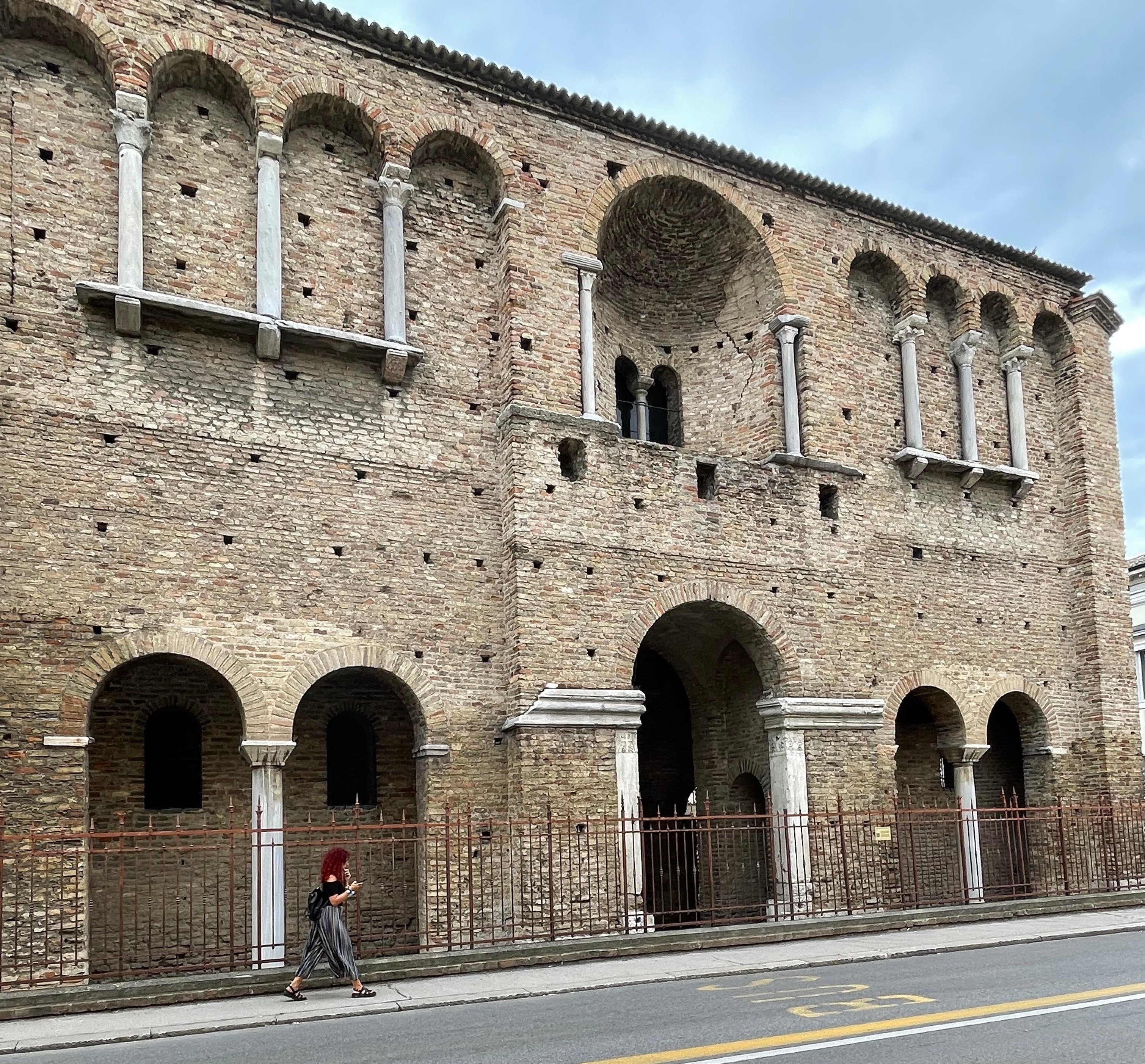
Galla Placidia and her daughter-in-law Licinia Eudocia ruled from the imperial palace in Ravenna. Today the ruins of the imperial palace are off limits to the public, but a diorama showing what the palace looked like in its heyday can be viewed at The Museum of the City and Territory at the Classe.

The Museum of the City and Territory offers a glimpse of Ravenna's past as an imperial capital and thriving international seaport. The port area itself was known as the Classe and lay 4 miles outside the city along the Adriatic coast.
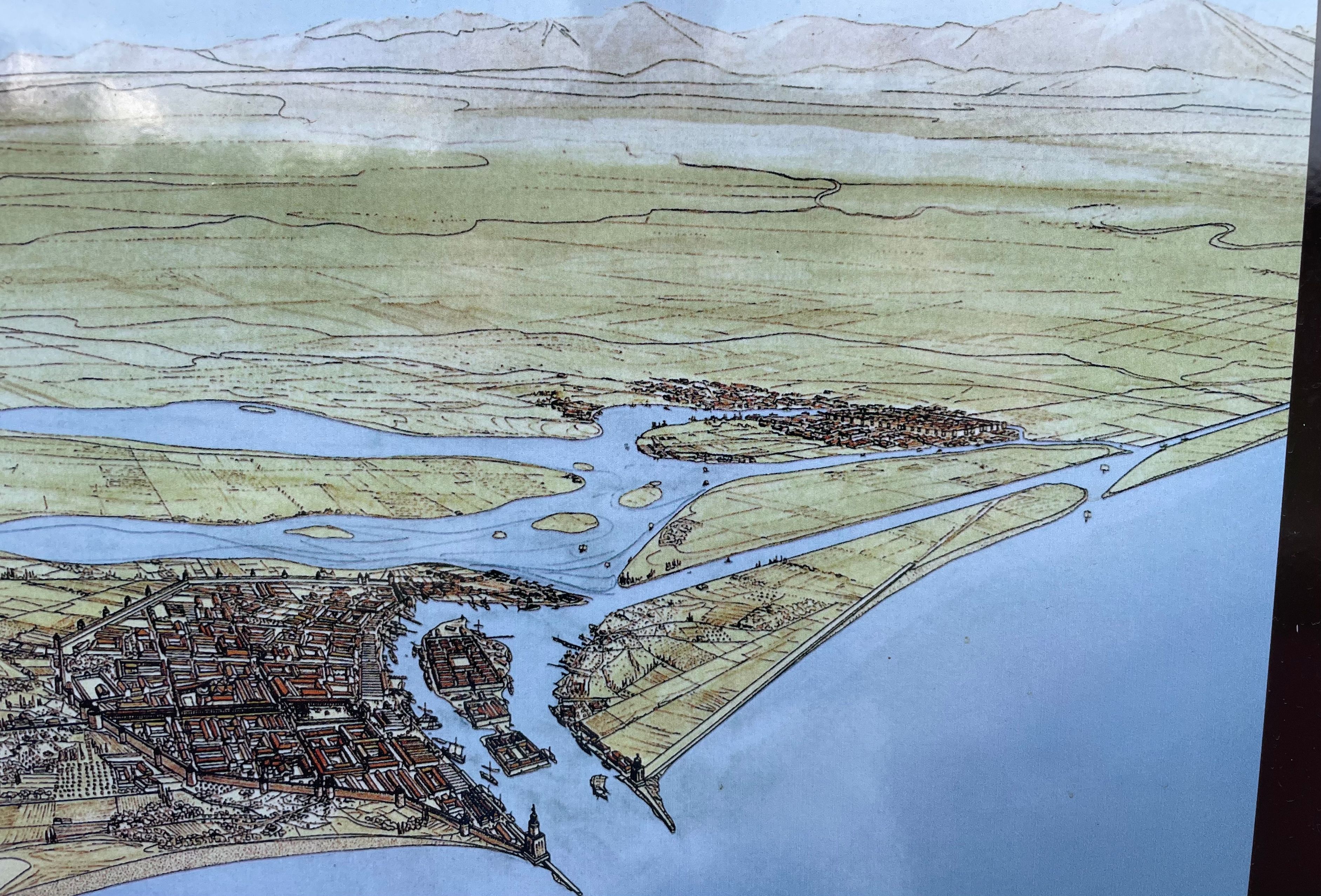
Due to silting over the course of 16 centuries, the Classe now lies six miles from the current coastline, but the remains of its docks and warehouses can still be seen today.
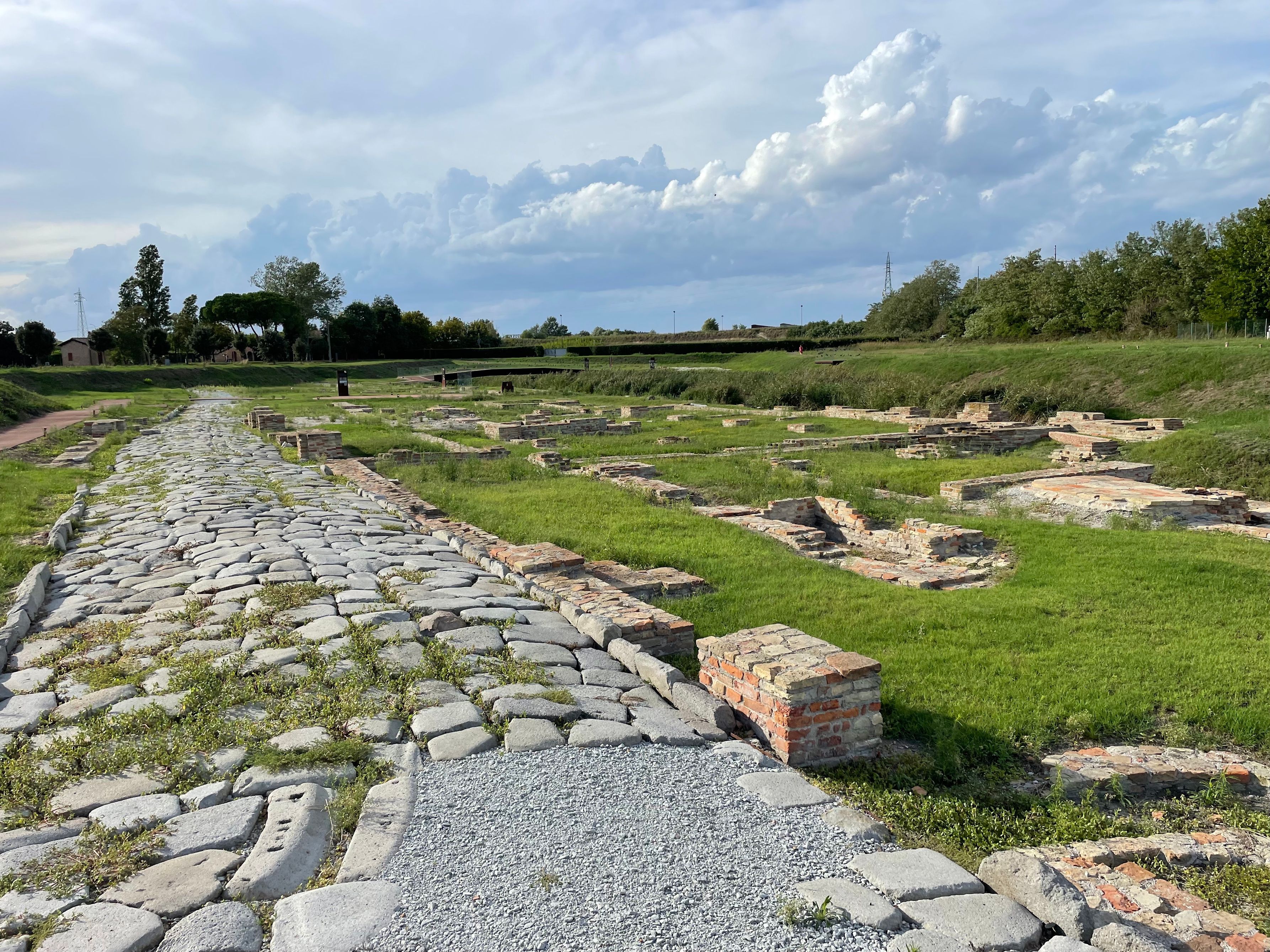
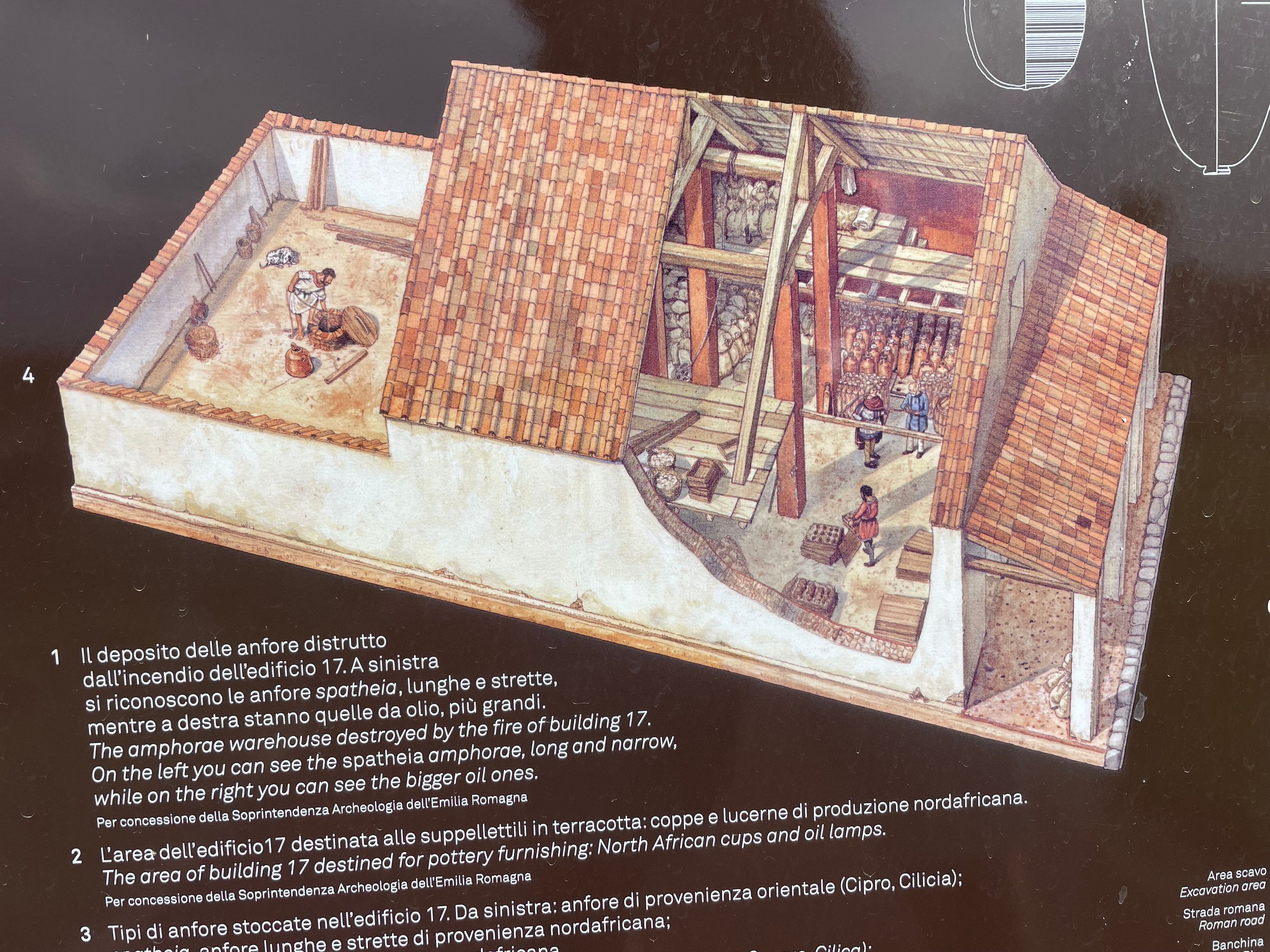
It takes a leap of the imagination to envision the sea lapping at the back doors of the warehouses that once lined this road (to the right in the above image). Explanatory panels at the UNESCO heritage site help the visitor to interpret what they see at the Classe.
A six mile drive to the east brings one to the current coast where the Adriatic Sea laps against the Lido Adriano beneath a dramatic September sky. Everything between here and the Classe was underwater during the Roman era.
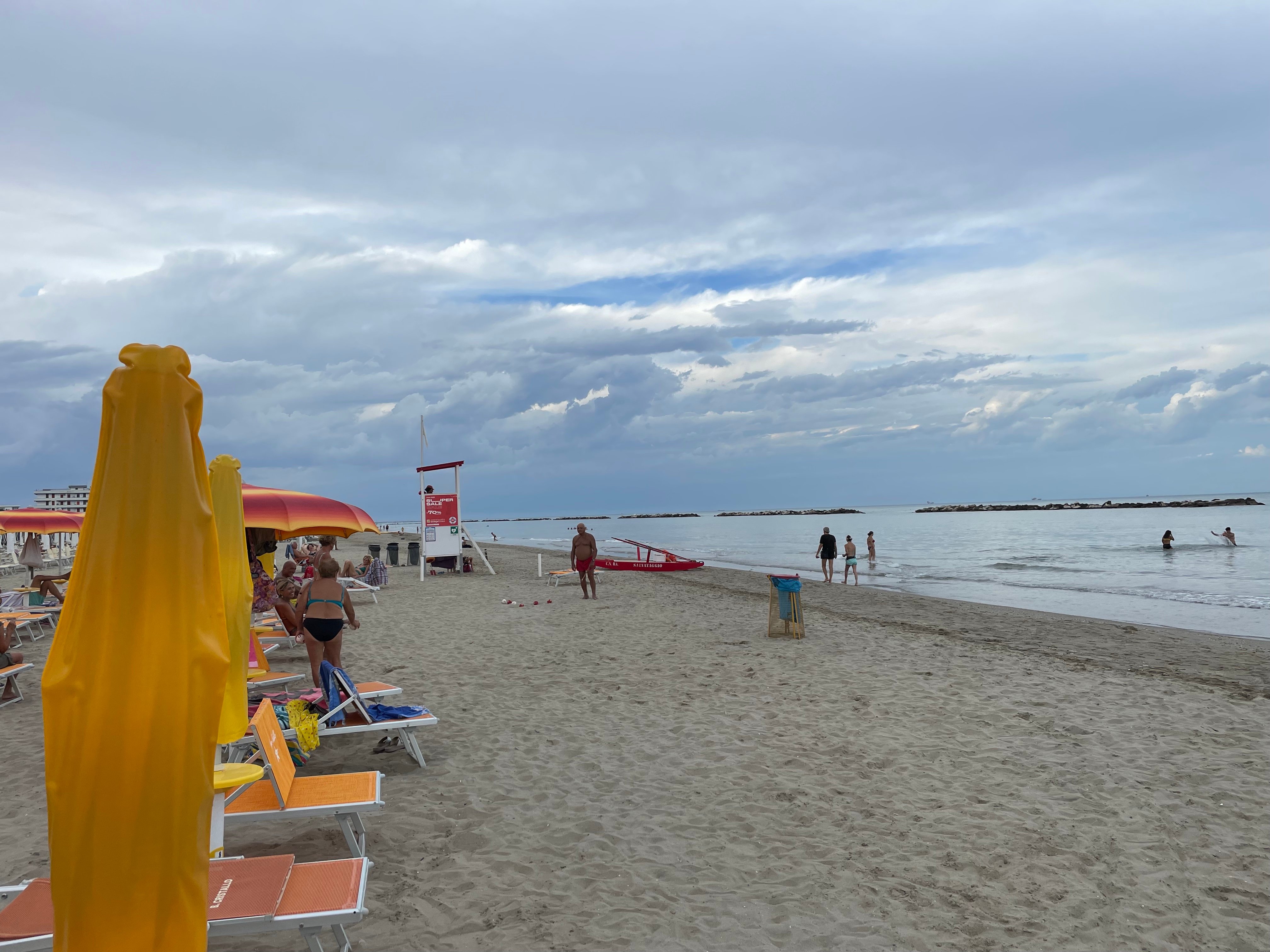
Unlike many Italian beaches during the summer months, the Lido Adriano outside of Ravenna is sparsely populated and ready to accommodate newcomers. Most people who come here are locals. Compared to other cities in Italy, Ravenna hardly qualifies as a tourist hotspot but has much to offer.
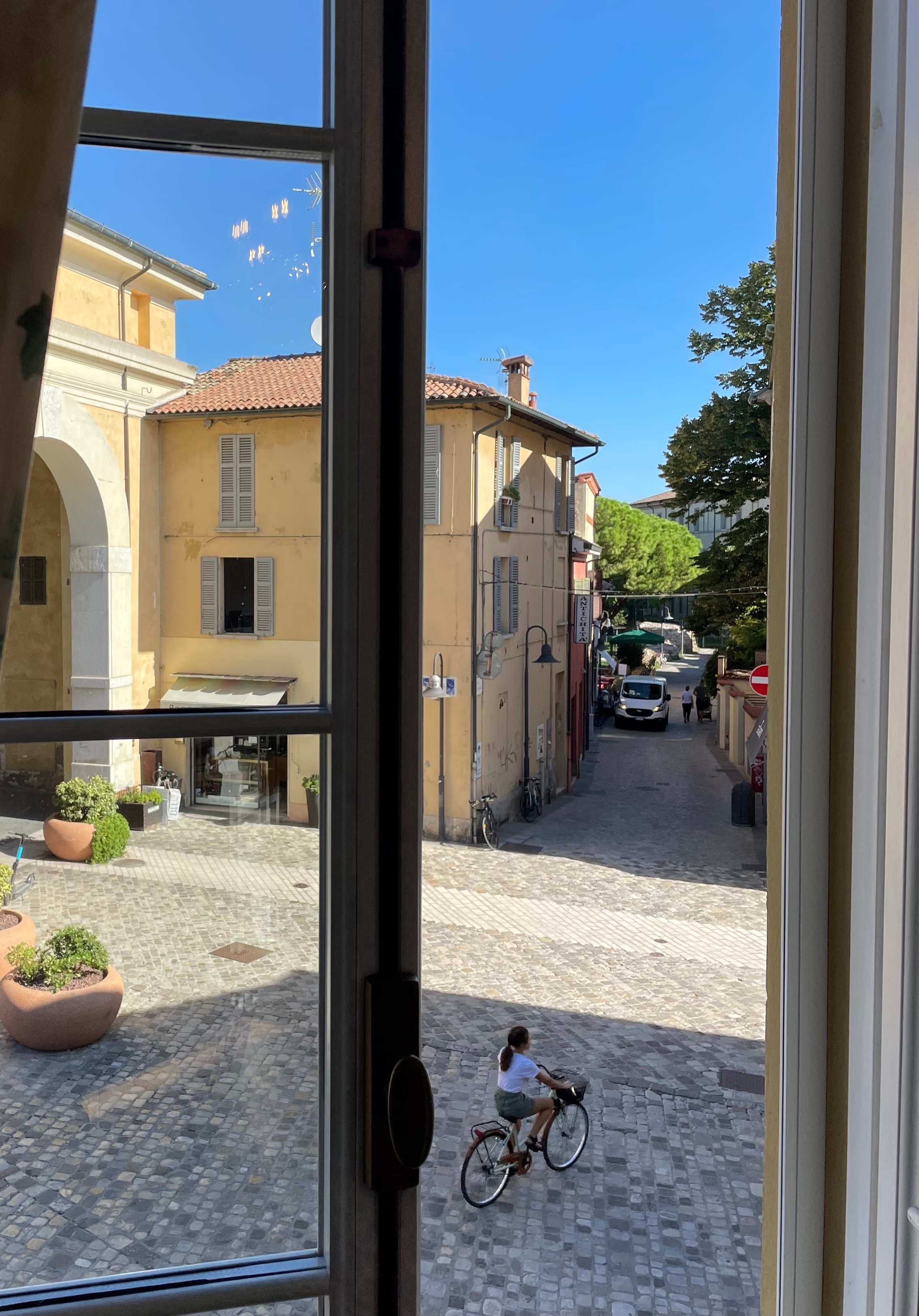
Besides its historical importance for students of Roman history, Ravenna is a charming Italian city offering the best of what Italy has to offer without the heat and overcrowding.
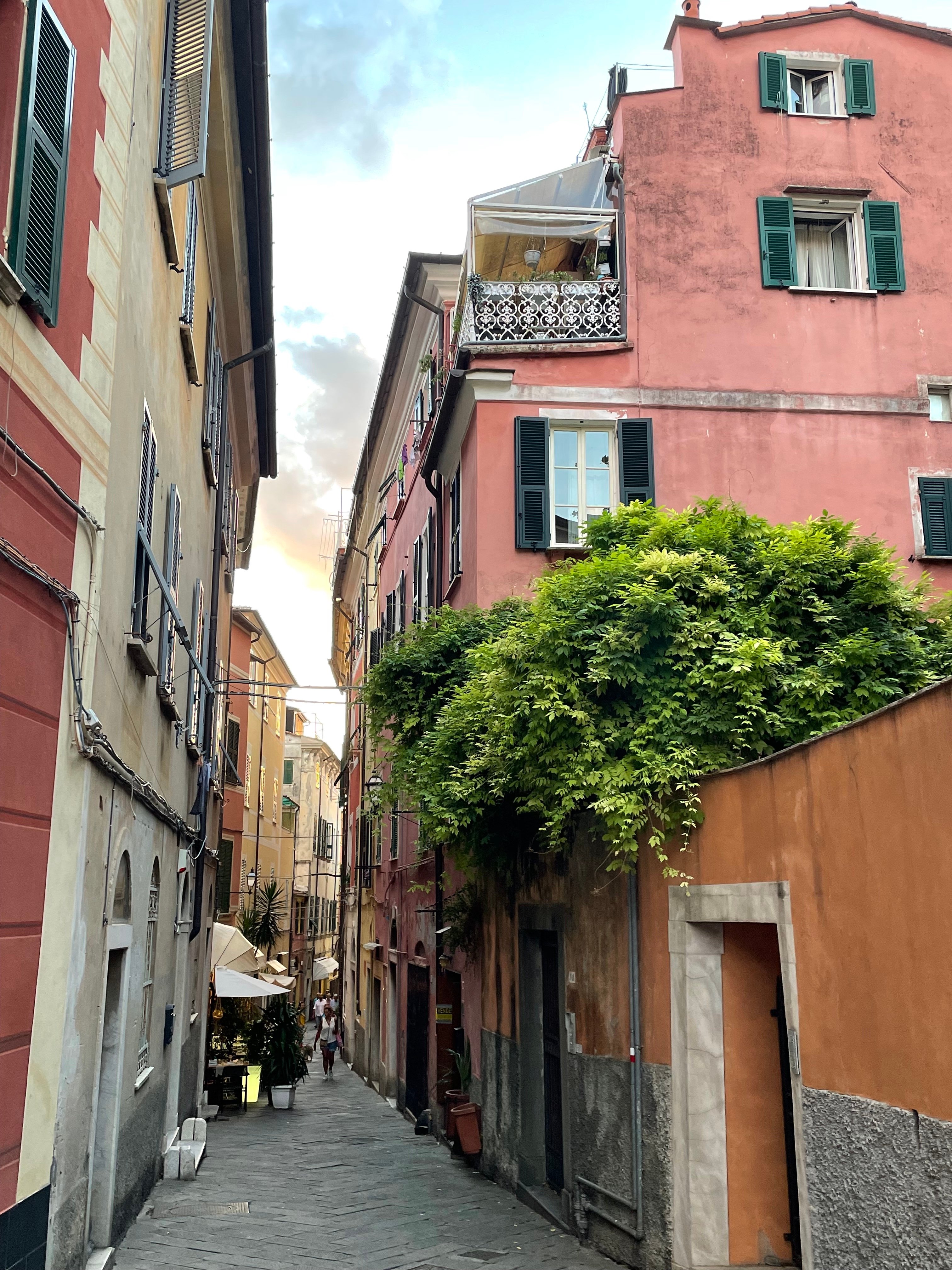
If you are interested in Roman history, and especially the final century of the Roman Empire before the Fall, Ravenna is a must see. In addition, if you seek a quiet getaway from the usual tourist grind during your visit to Italy, adding Ravenna to your itinerary will fit the bill.
